Showing posts with label Barbados. Show all posts

22 November 2016

The Whole Reason


Barbados marks its Golden Jubilee anniversary of independence this month. In recognition, I'm sharing here the dramatic monologue that I wrote and performed for NIFCA* thirteen years ago. This piece was, and is, a challenge to all of us Barbadians alive today to live up to the great debt we owe our ancestors — a reminder that we are, literally, “the living fulfillment of the dreams of heroes past.”


“I will call into the past, far back to the beginning of time, and beg them to come and help me. At the judgment I will reach back and draw them in to me—and they must come. For at this moment, I am the whole reason they have existed at all.”

—the character Cinque in the film Amistad

Very early one morning, many years ago, a young man in his late teens was kidnapped while working in his family ground in the Asante region of Ghana in West Africa. What this young man’s name was, I do not know. They boy did not recognize his captors but it was obvious that they were Asante like himself.

They bound his hands and tied him with ropes and, taking the cover of the forest that day, they forced him to march 12 miles to the sea, to the port city named Cape Coast. There they threw him into the prison cells of Cape Coast Castle.

 Locked up with him in the dungeon, the boy found other young men, woman and even little children: some kidnapped, some prisoners of war, some criminals. Within a few days the tiny, dark, stinking cell became a tomb and the young Asante saw many prisoners die while in that place—but he was numbered among the survivors.

After 20 days the boy was violently awakened very early one morning and herded out of the castle with the other hostages. They were forced out through a narrow opening to the sea that he heard the others call The Gate of No Return.

The boy was loaded into a canoe with about twenty other prisoners and taken out to what looked like another castle: a castle made of wood and cloth, floating in the water off the coast.

And so began this young man’s Middle Passage.

The young Asante was kept along with the other men, bound in chains of iron in the cargo hold of the great ship. There was no room for him to ever stand up, all he could do was only to lay flat or crouch down. There was barely enough air to breathe. Day after day, the heat of the sun and the smell of the endless sea—mixed with the stink of sweat, piss, excrement, blood and disease—were unbearable.

Twice a day the young Asante was herded above deck to be fed: yams or beans and a little water. And many days, young men and women refused food and prayed for death instead. Some threw themselves overboard and succeeded in their resolve. Those who were caught were savagely beaten as a warning to the rest. Others simply willed themselves to die and their spirits flew away home in the night. The bodies of dead Africans were thrown overboard and they became food for the sharks that followed the ship.

The Asante boy spent the next 40 days inside this ship’s hold. There were nearly 400 other black souls on board, a tiny portion of the 15 million Africans who ultimately were shipped to the New World as slaves...

    Chains (The Sounds of Blackness):
    Chains
    Chains
    Chains.
    Why were my people brought in
    Chains
    Chains
    Chains?
    Why were my people sold as
    Slaves
    Slaves
    Slaves?
    God, won’t you free us from these
    Chains?
    
    (Never say die…)

Many women, men and children did die during that awful crossing of the Atlantic. But this particular young man was strong and he survived until, very early one morning, the island of Barbados took shape on the horizon and the ship landed in Carlisle Bay. There he was taken ashore, washed and oiled and then sold to a sugar planter for maybe 50 or 60 British pounds and transported to the plantation where he would spend the remainder of his natural life.

How long the young Asante lived, I do not know. But while he lived he worked the sugar lands six days a week, from sunrise to sunset—and seven days during harvest-time. He lived—and loved. And the woman he loved bore him a daughter and she grew up a slave. But, thank God, in her lifetime she was privileged to see the day of freedom!—the day of the legal end of slavery in Barbados. But she did not see the end of hardship for herself and her people—or the end of hunger or homelessness or devastating hurricanes that killed thousands. But she survived and her children survived.

New generations came and passed. How many exactly, I cannot tell. But I do know that, eventually, one of their offspring bore a son—who is the man standing before you today.

So, this evening: I am a survivor because the blood of survivors literally flows in my veins. And I am strong because I am the offspring of those who were strong and those who overcame.

And so are you. And we—you and I in this place today—are the living fulfillment of the dreams of those heroes past. And, in a sense, we are, at this moment, the whole reason our ancestors have existed at all.

Think about that: that you are the reason some Asante boy held on as he sailed across an unfamiliar and vast ocean towards an unknown future. Your freedom was the hope in some black woman’s eye as she labored in the cane-ground or in the kitchen, her belly heavy with child.

So will you allow yourself to become a slave once again—to a spliff or to a leaf or to a coke-pipe? No! Young men: instead of chaining the dog, will you allow your ‘pit-bull’ to make you its slave again? No! And will we allow this generation to be bound in chains again by HIV and AIDS? No!

Too many have fought that we should now fail. We must be strong—as strong as that Asante boy was, as strong as those others had to be in order to survive. And we are—for we are their children. We have within ourselves the heritage of their strength that is ours to draw on. And the legacy of their sacrifice is our obligation to honour, here and now.

___________


© 2003 Samuel Brathwaite. All rights reserved.


*National Independence Festival of Creative Arts (NIFCA)
Cinque quotation from the film “Amistad”, written by David Franzoni, © 1997 HBO Films.
Chains from the album “The Evolution of Gospel” by The Sounds of Blackness, © 1991 Perspective Records Inc.
Photographs by M. Baldeo, © 2003, courtesy National Cultural Foundation, Barbados.

10 October 2011

When You Wish Upon a Star


There’s been some diplomatic tension in the Caribbean in the last few weeks—not only among the political establishment but with some of our brand ambassadors, as well.
[Miss~Lisa/flickr]

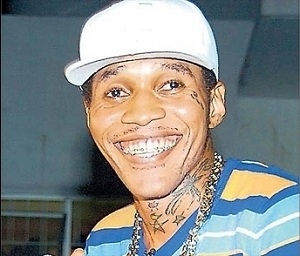
In Jamaica, telecommunications company LIME just pulled the plug on a hot new reality show, on its new mobile TV channel Peppa, that featured dancehall star Vybz Kartel. Kartel was last week charged with murder following the discovery of a dead body at his house. He has had a history of run-ins with the law; a few days after the murder charge, he was once again before the courts charged with marijuana possession.

Rihanna has also had a troubling couple of weeks of bad publicity (is there really such a thing in the entertainment world?) of a different stripe. First, there was the unfortunate choice of what to wear to church in Brazil. Then a case of over-exposure in Northern Ireland. Most recently, in her interview appearing in the latest British Vogue, Rihanna professed her affinity for the “c-word” and declared that her fellow Barbadians use the sexual expletive in conversation as they would breathe air. This past June, Rihanna signed an exclusive multi-year contract with the government to promote Barbados tourism; she was previously proclaimed a cultural ambassador-at-large for the country.


[via JamaicaObserver.com]
The potential headaches involved in managing one’s brand ambassador may be a relatively new challenge for Caribbean companies but is not a novel one for the marketing profession. This past March, for instance, the American insurance company Aflac decided to part ways with comedian Gilbert Gottfried—the voice of the Aflac duck mascot in its famous TV commercials—after he posted online jokes about the Japanese tsunami. And, of course, Tiger Woods became the instant-classic case study of how personal failings led to the unwinding of his lucrative endorsement contracts with GM, Accenture, Gillette, Tag Heuer and AT&T.


Businesses have sought out the patronage and endorsement of the rich and famous for centuries, going back at least to the origins of the royal warrant. Today, brands recruit celebrity spokespersons and ambassadors— most often from the worlds of music, screen and sport— for the prestige, media attention, fan base and increased sales that they can bring. It’s important that the stars align: that the anointed one’s own personal brand be compatible with the values and aspirations of the business brand. The objective is, ultimately, that the minds, hearts and wallets of many new customers will be drawn into a profitable orbit by the gravitational pull of the new star; while, hopefully, the appeal of both brands is enhanced by the relationship.

In return for the financial reward, the brand ambassador is expected to represent, to endorse and promote the brand—to use or wear its product, star in its commercials or media, appear at its corporate events, tweet about it, or by any other means that the company’s marketing team can dream up and get written into a contract.

A brand, however, does not dictate how an ambassador lives their life and cannot be responsible for everything that they say or do. It therefore has to be prepared to take protective action if its representative unwisely begins to “do foolishness”. The brand will want to avoid contagion by association; protect its reputation with customers and the marketplace; and evaluate the value it is receiving for its endorsement investment. If necessary, contractual escape clauses will have to be invoked. It is most likely that Gilbert Gottfried was swiftly let go by Aflac not so much because his tsunami jokes were in questionable taste but because a huge chunk of the company’s business is generated in Japan; you do not make light of your own customers’ misfortune.

As marketers, we hitch our wagons to a shooting star and hope for a great ride. But stars do sometimes fall from the sky. And very occasionally, they blow up and self-destruct completely. A supernova is extremely bright and attracts a lot of attention but you don’t want to be standing next to one when it happens (cue footage from the Tiger Woods Story).

LIME made the right decision—and the only decision that it could—to place its relationship with Vybz Kartel on pause until his significant legal troubles have been closed out. In the case of Rihanna, perhaps someone in the Barbados Tourism Authority needs to temporarily recall the ambassador, have a quiet word and remind her that the objective of the relationship is actually to enhance Barbados’ appeal and thus to avoid saying things that will embarrass or damage the brand.

In announcing her endorsement contract in June, Rihanna was quoted as saying: “Barbados is a place like no other and one of the reasons for this is the spirit and national pride of our people.” It’s hard to reconcile fostering national pride with declaring to the world that Barbados is a place whose people love to accost each other in the most obscene way. (Whether or not there is any truth in what was said is not the issue here. The brand ambassador’s role is to portray her product in its best light, not its worst.)


In political diplomacy, a country’s representative is given the formal title of Ambassador Extraordinary. That sums up the expectation in brand diplomacy, as well: counting that the celebrity’s exceptional ability to command the spotlight and influence the taste of the consuming public will help the product to shine so much brighter.
[Rolex.com]
And by the nature of their position—their own visibility, the privilege of being associated with their sponsor, the financial investment involved—the ambassador is justly held to an extra-ordinary standard of performance. The brand ambassador is a role model--for their brand, even if for nothing else. And the job begins the moment they sign the endorsement contract and take the first cheque.

And happily, it seems that, even when brand stars fade or fall, redemption is still possible. Rolex has just embraced Tiger Woods as its newest brand ambassador, paying tribute to his “exceptional stature” in the sport of golf and expressing commitment to him for the long haul. Tiger’s star is ascendant once again. He has only to watch out for the flying hot-dogs as he gains altitude.


26 September 2011

Crossing Oceans, Connecting Peoples: Caribbean Marketing Mix, Sept 24


The Caribbean has been the crossroads of world history for 500 years. In this roundup of last week’s marketing news from around the region, we see Caribbean people and brands continuing to make connections around the globe. Our stories link Trinidad to Jamaica to Ghana to England to Barbados to Panama. Follow along.

Brand Bravo. Trinidadian cricketer Dwayne Bravo is seizing the future and shaping what happens next for him after West Indies cricket. Taking his cue from sport celebrities in other parts of the world, he’s about to monetize his appeal beyond the cricket field and develop “Brand Bravo”. He has just released a music video collaboration with Jamaican dancehall artist Beenie Man (and featuring Guyana’s Timeka Mashall), called “Beenie Man & Bravo”. Soon to follow will be his official website and the Dwayne Bravo Cricket Star Search.

[via caribpr.com]
Bravo has certainly been versatile on the cricket pitch, as both a batsman and medium-fast bowler.  He also has been blessed, in my view, with real charisma and star power even from his professional debut. He always exudes a joy and passion on the field, regardless of the team’s fortunes, with a smile nearly as wide as the cricket sightscreen. Recent injuries seem to have sidelined his West Indies team career but he’s bounced back to find favour in the IPL and other Twenty20 leagues elsewhere.

I’d love to—and expect to—see those values of versatility, resilience and passion demonstrated in whatever Brand Bravo ultimately becomes. After watching the music video for “Beenie Man & Bravo”, I predict that Dwayne will most likely focus his brand building efforts in non-musical directions in the future. Anyway, we sincerely wish you tons of success, DB.

[via SFLCN.com]
Jamaica Links. Jamaica is now helping to maintain the connection between the country of Ghana and the Ghanaian expatriate community in Great Britain.

JN Money Services, the remittance arm of the Jamaica National Building Society, has launched a new Ghana Money Transfer brand in the UK, in partnership with the Merchant Bank of Ghana.

Remittances from its Diaspora population remain an important source of foreign currency inflows into Ghana and this service targets the 90,000 Ghanaians living in Britain. National football star and English Premier League striker, Asamoah Gyan, has come on board as the brand ambassador.

JN Money Services has been operating in the UK for over 25 years is said to be the second largest remitter of funds to Jamaica, with branch offices and agents in 12 major cities across England.

[via ChelseaFC.com]
Sporting Barbados. Barbados has just signed a three-year promotional deal with the English football club Chelsea. 

The partnership will give the Barbados brand valuable exposure to Chelsea’s fans in the UK as well as in North America and the Caribbean. There is also a social component to the deal as Chelsea FC and the Barbados Tourism Authority plan to work together on various community projects in the two countries, including coaching programmes.

ECB
Barbados tourism planners have been keeping busy on the field: this football deal follows on from Barbados’ name sponsorship of the national T20 club cricket tournament in England this past summer. The Barbados Cockspur Rum Club Twenty20 competition brought exposure to 750 clubs across England and Wales. Ealing Cricket Club won the competition final on September 19 (beating Chester-Le-Street) and the match was broadcast live on Sky Sports.

Barbados Tourism Authority says that its promotional theme for 2012 will be The Year of Sport: From Grass Roots to World Class, as it plans to leverage Barbados’ impressive reputation for hosting world-class sporting events. So, stay tuned.

Barbados Telecoms. TeleBarbados, a voice and data telecommunications services provider, has launched a premium voice & internet service package for residential users, branded “VIP 4G Broadband”. Bandwidth up to 10 Mbps is available, with unlimited local and long-distance calls to the USA, United Kingdom and Canada.

Panama Silver Men. We couldn’t end this post without mentioning another cross-Caribbean connection—one that also goes across history. Barbadian filmmaker Alison Saunders is preparing to make a documentary telling the story of the thousands of Bajans and other West Indians who migrated to Panama at the beginning of the 20th century to help construct the Panama Canal.

Panama Fever: A Caribbean Journey is currently in fund-raising and pre-production. It was one of the regional projects selected for participation in the CaribbeanTales incubator held at last month’s Toronto International Film Festival (TIFF).

Nearly 60,000 silver men are thought to have traveled from Barbados to Panama to help build the Canal. Their motivation was economic and the flow of remittances to families back at home helped to stave off poverty and enable a measure of social advancement for tens of thousands of Barbadians.

Alison Saunders made her debut as a feature film writer and director in 2007 with Hit for Six!, a Caribbean drama about, of course, cricket.

22 September 2011

Food & Wine and Rum

Barbados will host its second annual
Food & Wine and Rum Festival this coming November 18-21.

It will be four days of cooking demonstrations, rum and wine tastings and gourmet dinners to be held at some of the most fabulous restaurants, estates and attractions on the island.

Eight celebrity international chefs will be coming to cook, including Ming Tsai and Marcus Samuelsson. They will be joining six Bajan chefs, along with local and visiting wine and spirits experts, to put on an epicurean feast for all the senses.

We love the website. It's both simple and beautifully designed, with gorgeous use of colour and photography and nicely integrated media. The images of the cocktails and plated dishes from last years event make you want to dive right into your computer screen.

With so many world-class restaurants and chefs, and its own Zagat guide, Barbados has aspirations of becoming the culinary capital of the Caribbean. And, of course, it is the very birthplace of rum, which has been made in Barbados for 350 years.

Cheers to the Barbados Tourism Authority for building such a great website (unfortunately, there's no web designer credit shown on the site, so we cant give them their props).

If you love good food and drink (who doesnt?), then the third week in November in Barbados will definitely be the place to be.

Food, wine and rum. Eat, drink and be merry.

Feast your eyes: www.foodwinerum.com

20 September 2011

@event Caribbean 2011


 The Information Society of Barbados will host a major Information and Communication Technology (ICT) conference next month.

@event Caribbean 2011 will take place October 25 & 26 at the Lloyd Erskine Sandiford Centre.

Taking the theme ICT: the Catalyst for Economic Development, the ISB’s conference will explore how Barbados and the Caribbean region can best leverage ICT’s to advance its economic development and prosperity.

Some of the slated speakers
There is an impressive lineup of scheduled speakers and presenters who will bring perspectives from Barbados, Trinidad & Tobago, the Cayman Islands, Malta, North America, the UK and elsewhere.

Among them is Michael T. Jones, Google Inc.’s chief technology advocate, who will make a keynote presentation on how Google is making good on its mission to organize the world’s information and make it universally accessible.

The conference program will cover issues such as technology innovation; e-business and cloud computing; privacy and security in the digital age; leveraging social media; and healthcare innovation.

Special sessions will focus on how governments can use ICT to transform productivity and improve service to citizens. There will also be opportunities for local developers to learn how to get into the potentially lucrative business of building mobile apps.

An ICT trade exhibition will run in parallel with the conference and afford local, Caribbean and international vendors, service providers, consultants and entrepreneurs with the opportunity to showcase their products and services and do business.

All details of the conference programme, exhibition and registration are available at www.isb.org.bb/events.

The ISB anticipates that this gathering will be an opportunity to re-energize the ICT and economic landscapes in Barbados and the Caribbean. If you’re a technology professional, information user, business decision-maker, government or policy specialist, entrepreneur, vendor, consultant or educator—then plan to be there and join the conversation.